

19 min read


The decision between NetSuite and Sage x3 reflects two fundamentally different ERP philosophies. Oracle NetSuite is a fully cloud-based ERP solution that unifies financials, CRM, inventory, analytics, and automation within a single software environment.
Sage X3, by contrast, appeals to companies seeking control over deployment architecture, deeper manufacturing and distribution workflows, and how the ERP system is configured around specific operational requirements.
This isn't simply an ERP software comparison between two popular ERP solutions on the market. It's a strategic choice about how much flexibility, operational depth, deployment control, and standardization your business needs.
When comparing Oracle NetSuite vs Sage X3, NetSuite typically emerges as the stronger fit for organizations prioritizing a purely cloud-based ERP solution with broad suite unification, while Sage X3 may better serve businesses with complex production, inventory, and supply chain management needs that demand more architectural control.
This guide covers:
-
How NetSuite and Sage X3 differ in deployment, customization, and operational flexibility
-
Which ERP platform better supports financial management, inventory, and supply chain management
-
What buyers should compare around analytics, pricing, integrations, and long-term fit
P.S. ERP decisions are easier when your data and integrations are accounted for early. Protelo’s NetSuite Implementation Services help teams move to NetSuite with clean data, connected systems, and less operational disruption.
Book a consultation call to reduce migration risk before ERP selection becomes expensive.
Sage X3 vs NetSuite ERP: Quick Glance at the ERP Software
NetSuite and Sage X3 ERP: Core Differences in Key Capabilities and Features
The comparison between NetSuite and Sage X3 centers on 10 core areas where these two platforms diverge most clearly. These differences reflect not just feature gaps but fundamental architectural and strategic choices that shape how each ERP system operates, scales, and fits different business requirements.
Understanding where these popular ERP solutions separate helps buyers move beyond surface-level comparisons into the decision factors that actually determine long-term fit. When you compare NetSuite vs Sage X3, the platform's capabilities and features reveal distinct approaches to business software design, deployment models, and operational priorities.
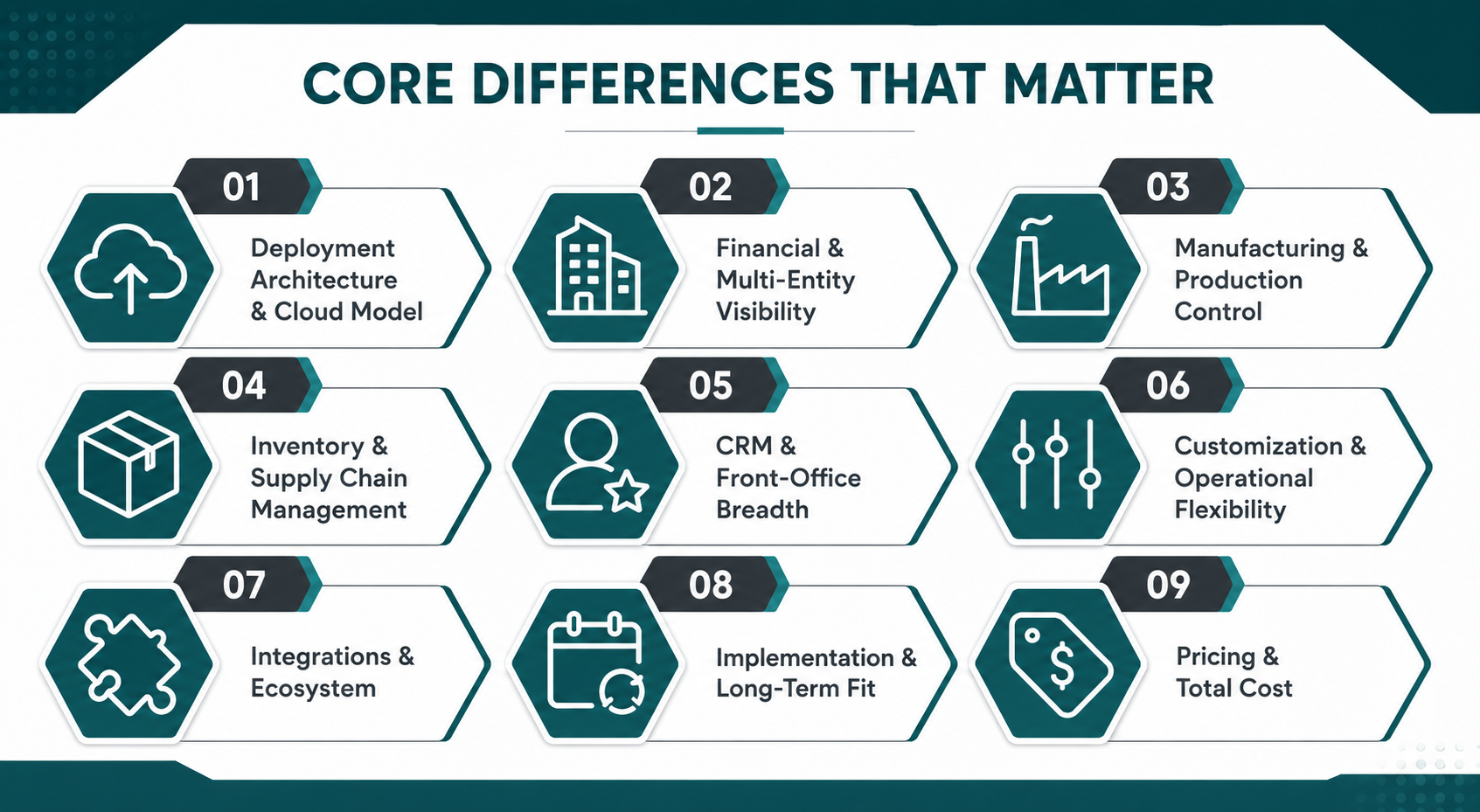
Deployment Architecture And Cloud Model
Deployment architecture represents one of the clearest dividing lines when you compare NetSuite and Sage X3.
Oracle NetSuite is a fully cloud-based ERP system built natively for the cloud from inception. The platform operates as a multi-tenant SaaS solution, meaning all customers run on the same version with automatic bi-annual NetSuite updates managed entirely by Oracle.
This cloud-native ERP architecture eliminates infrastructure management, version control decisions, and upgrade planning for the customer.
Sage X3, by contrast, takes a different approach to deployment. X3 can be deployed on-premise, hosted in a private cloud, or accessed through a public cloud environment.
Read Next:
Financial, Business Management, and Multi-Entity Visibility
Both Sage X3 and Oracle NetSuite deliver reliable financial management, but they approach it differently based on core business needs.
NetSuite offers strong financial management capabilities unified across general ledger, accounts payable, accounts receivable, budgeting, forecasting, and multi-entity consolidation within a single system. The platform's financial management capabilities extend naturally into real-time dashboards, automated workflows, and integrated reporting that connects finance to CRM, inventory, and operations without requiring external business applications.
NetSuite shines when the goal is to unify financial visibility across departments, subsidiaries, and geographies inside one comprehensive ERP.
Sage X3 also delivers robust financial management, particularly effective when finance must stay tightly connected to production, supply chain, and operational control. Sage X3 is better for companies where financial management capabilities need to flex around complex manufacturing workflows, multi-site operations, and industry-specific compliance requirements.
Manufacturing, Traceability, And Production Control
Manufacturing depth represents one area where these two ERP systems serve different buyer priorities. NetSuite supports manufacturing and planning within a broader unified ERP software strategy that also covers CRM, reporting, and finance.
The platform works well when the company wants manufacturing inside a wider business management system rather than as the primary operational focus, and when the goal is to run more functions within a single software environment rather than optimizing production workflows in isolation.
Sage X3 is often evaluated specifically for production management, scheduling, quality control, compliance, and traceability.
NetSuite:
-
Unified Manufacturing Approach: NetSuite supports manufacturing within a comprehensive ERP suite that unifies production with financials, CRM, and analytics.
-
Suite-Led Strategy: Works best when the company wants manufacturing integrated into a wider business management platform rather than as a standalone production system.
-
Cross-Functional Integration: More compelling when the goal is to connect manufacturing to sales, finance, and customer service within a single system.
-
Scalable ERP Functionality: NetSuite offers manufacturing capabilities that scale with business growth and integrate with other ERP capabilities.
Sage X3:
-
Production-Centric Design: Sage X3 is a reliable platform built specifically for production management, scheduling, quality control, and traceability as core strengths.
-
Specialized Workflows: Designed for manufacturers with specialized operational requirements around batch control, work orders, and compliance.
-
Operations-First Positioning: X3 is often evaluated primarily for production workflows and plant-level control rather than suite breadth.
-
Manufacturing Depth: Sage X3 allows freedom in how production processes are configured and controlled at the operational level.
Read Next:
Inventory And Supply Chain Management
Inventory management and supply chain management represent core capabilities and features in both platforms, but the emphasis differs based on business processes.
Oracle NetSuite delivers comprehensive order and inventory management within a unified ERP platform that connects inventory to financials, CRM, and fulfillment workflows. The platform supports multi-location inventory, demand planning, warehouse management, and supply chain visibility inside one system.
NetSuite excels when buyers want inventory, fulfillment, finance, and adjacent workflows unified without requiring external business applications or separate software systems.
Sage X3 offers inventory and supply chain management capabilities as well, with particular strength in production-oriented supply chain workflows, traceability, and operational control. It allows flexibility in how inventory and supply chain processes are configured around specific business needs, particularly in manufacturing and distribution environments where inventory control must integrate tightly with production scheduling and quality management.
Read Next:
CRM, Customer Relationship Management, And Front-Office Breadth
NetSuite delivers native customer relationship management, sales automation, customer service management, and broader front-office continuity as core platform strengths. The platform integrates CRM directly into the ERP system, allowing sales, marketing, service, and finance teams to work from unified business data without requiring separate software solutions.
The platform offers native CRM functionality that connects customer interactions to order management, billing, business intelligence, and reporting within a single system, making it particularly strong when the business wants to unify customer-facing processes with back-office operations inside one comprehensive ERP platform.
This integration of customer relationship management with ERP functionality represents a key differentiator when comparing Oracle NetSuite vs other ERP software solutions.
Sage X3 focuses more heavily on operations, production, and supply chain management rather than front-office breadth. Organizations evaluating Sage X3 ERP typically prioritize manufacturing and distribution capabilities over native CRM depth, and may use external business applications or third-party integrations to handle customer relationship management and front-office workflows.
Customization, Ownership, And Operational Flexibility
Customization represents another real decision point in the NetSuite vs Sage X3 evaluation. Both ERP software solutions support customization, but the approach and degree of control differ significantly based on what makes each software solution right for your business.
NetSuite:
-
Configuration Within SaaS: NetSuite offers strong configuration, workflows, automation, and module expansion inside a managed SaaS model that eliminates infrastructure management.
-
Scalable Customization: Strong fit for companies that want extensive customization capabilities without managing the underlying technology stack directly.
-
Platform Evolution: Designed for buyers who want ERP capabilities to evolve through modules, SuiteApps, and partner applications within a standardized cloud-native ERP environment.
-
Advanced Features: NetSuite also allows customization through SuiteScript, SuiteFlow, and other development tools that extend ERP functionality.
Sage X3:
-
Deployment Flexibility: Sage X3 offers flexibility in deployment that appeals to organizations wanting control over infrastructure and system architecture.
-
Operational Tailoring: Allows freedom in how businesses configure workflows and software environments around specific operational requirements.
-
Architectural Control: Designed for companies that prioritize control over architecture, operational design, and system behavior.
-
Configuration Options: Sage X3 can offer significant flexibility in how the ERP product is configured and deployed across different business units.
Read Next:
Integrations, External Business Applications, And Ecosystem
Integration capabilities and ecosystem breadth differ between these two popular ERP solutions on the market. NetSuite provides integration through APIs, SuiteCloud development tools, and a large partner application ecosystem.
The platform's SuiteApp marketplace offers pre-built integrations and extensions that expand ERP functionality without custom development, making it particularly strong when the business wants established integration patterns and a large community of certified partners building on the platform. NetSuite also allows integration with external business applications through various connector options and APIs.
NetSuite:
-
Native Integration Ecosystem: Comprehensive native integration across finance, CRM, inventory, and operations within the suite eliminates many common integration needs.
-
SuiteCloud Platform: Robust development and integration tools for custom extensions and third-party connections.
-
Partner Ecosystem: Large marketplace of certified SuiteApps and integration partners with pre-built connectors.
-
Unified Data Model: A single database structure simplifies integration and reporting across modules, keeping business data unified.
Sage X3:
-
Flexible Integration Options: Sage X3 also includes connectors and integration options, with integration planning depending on deployment style, partner setup, and architecture choices.
-
Deployment-Dependent Approach: Integration patterns vary based on whether the system is deployed on-premise, hosted, or in the cloud.
-
Customizable Architecture: Appeals to organizations where integration flexibility matters more than having one large native suite ecosystem.
-
Connector Support: X3 also includes a connector framework for linking to external business applications and third-party software systems.
Implementation Style, Updates, And Long-Term Fit
How ongoing ownership feels after go-live differs substantially between these two ERP systems. NetSuite delivers standardized upgrades twice annually, with all customers automatically upgraded to the latest version. This approach eliminates version lock, reduces IT burden, and ensures continuous access to new NetSuite features and capabilities.
NetSuite updates are managed entirely by Oracle, meaning businesses do not need to plan upgrade projects, test version migrations, or manage infrastructure changes. This standardized update model works particularly well for companies that want to focus internal resources on business operations rather than ERP maintenance. The cloud-based ERP model ensures all users benefit from the same platform improvements and security enhancements.
Sage X3 implementations vary in update management based on the deployment model. On-premise deployments give companies control over upgrade timing but require internal resources to manage version updates, test changes, and maintain infrastructure. Hosted and cloud deployments of Sage X3 may include managed updates, but the experience varies by hosting provider and service agreement.
Companies choosing Sage X3 should clarify how updates will be managed, what testing responsibilities remain with the customer, and how version control will affect long-term maintenance costs.
Read Next:
-
Off-Track ERP project? Steps to Rescue a NetSuite Implementation
-
The Benefits of a Phased NetSuite Implementation for a Faster ROI
Pricing, ERP Pricing, And Total Cost
ERP pricing structures differ significantly between NetSuite and Sage X3, affecting both transparency and total cost of ownership. NetSuite follows a subscription-based licensing model with pricing tiers based on company size, user count, and module selection. Sage X3 pricing is generally quote-based and less transparent publicly, with costs varying based on deployment model, customization requirements, and implementation scope. Understanding ERP pricing for both platforms requires evaluating not just software costs but also implementation services, ongoing support, and infrastructure requirements.
Note: All pricing figures are directional estimates, not fixed rates. Total cost depends on factors such as modules, number of users or employees, integrations, and implementation complexity. Both NetSuite and Sage X3 typically require custom pricing based on business requirements.
When You Should Go With Oracle NetSuite
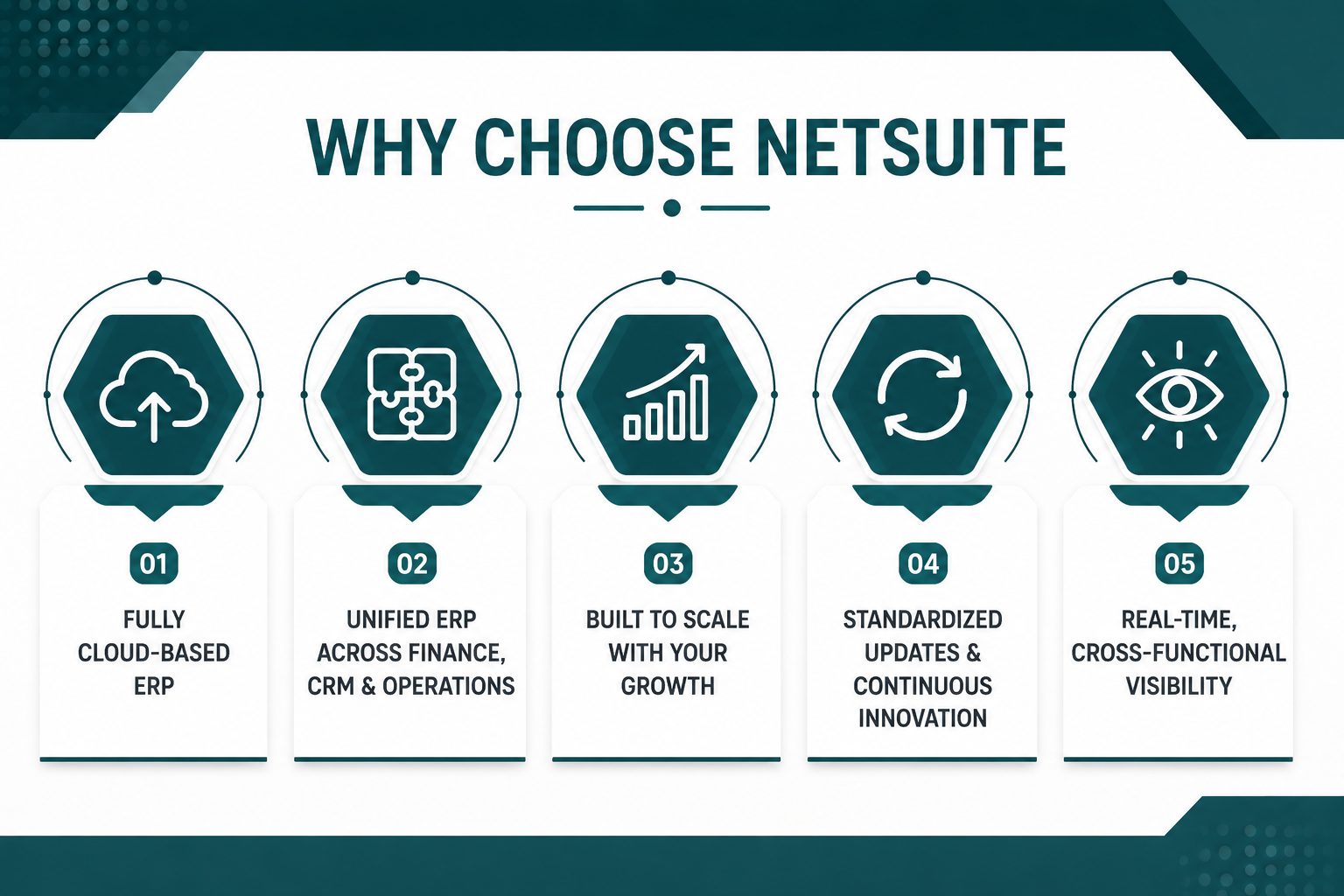
NetSuite ERP emerges as the stronger choice when the company wants a fully cloud-based ERP solution that unifies financials, CRM, inventory, analytics, and operations within a single software platform.
The platform excels for organizations that value native CRM and broader suite coverage, particularly when leadership wants one ERP system for finance, reporting, automation, and operational visibility rather than managing multiple software systems or external business applications. NetSuite works particularly well when the business expects to grow into more modules over time and wants a scalable ERP that evolves through standardized updates and partner applications.
Companies that prefer unified business management over deployment flexibility and value real-time cross-functional visibility typically find that NetSuite delivers a stronger long-term fit and faster time to value. When you use NetSuite, you gain access to a comprehensive ERP with integrated features and capabilities that span the entire business operation. The platform's core capabilities and features support growth without requiring re-platforming or major architectural changes.
Read Next:
When Sage X3 Might Be A Better Fit
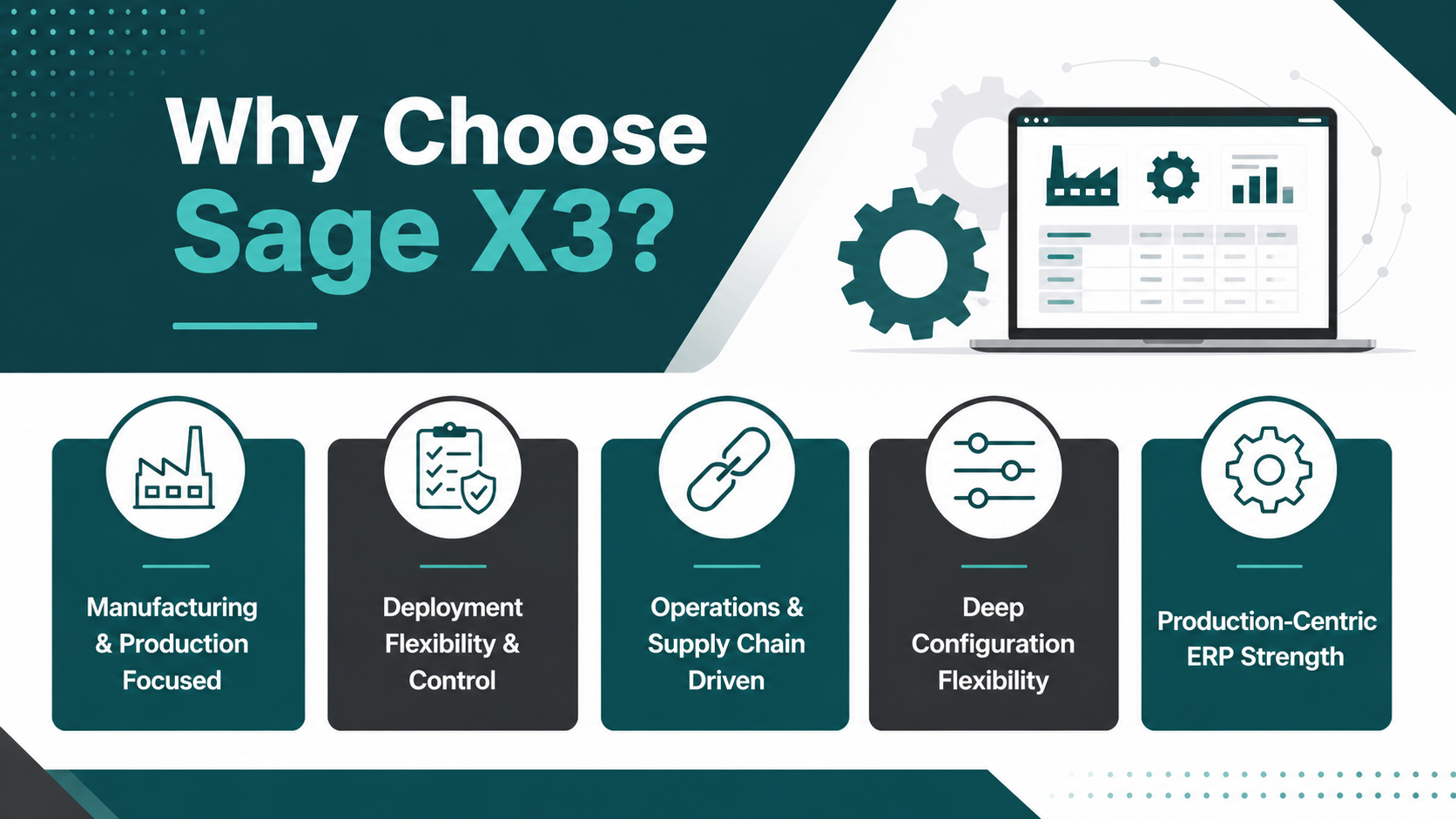
Sage X3 serves businesses where manufacturing, traceability, or production scheduling is central to the ERP decision. The platform appeals to companies that need deployment flexibility and architectural control, particularly when regulatory, security, or operational requirements make deployment architecture a primary consideration.
Sage X3 works well for organizations where operations and supply chain management drive business requirements more than native CRM breadth, and where the team has specialized operational workflows that benefit from deeper configuration flexibility.
Companies that prioritize production-centric ERP functionality and prefer control over deployment architecture typically evaluate Sage X3 for its manufacturing depth and operational tailoring capabilities. Like Sage X3, other ERP products that emphasize operational control and deployment flexibility may appeal to similar buyer profiles, though Sage X3 is often positioned as a leading option in this category.
The platform's features and capabilities around manufacturing and production control make it particularly strong for companies where these functions drive the ERP selection process.
The Right ERP Choice Depends On What Kind Of Control Your Business Needs
When you compare NetSuite vs Sage X3, you're really evaluating two different approaches to business software architecture and operational control.
NetSuite delivers stronger suite breadth, native CRM integration, cloud standardization, and unified business management for companies that want to consolidate operations inside one comprehensive ERP platform.
Sage X3 offers manufacturing depth, production control, and deployment flexibility for operationally complex environments where specialized workflows and architectural control outweigh the benefits of a purely cloud-based ERP solution.
Key Takeaways:
-
NetSuite excels at unified cloud ERP, native CRM, and cross-functional suite breadth.
-
Sage X3 specializes in manufacturing depth, deployment flexibility, and production-centric operations.
-
The better choice depends on business processes, control needs, and long-term ERP ownership model.
P.S. Before you choose the right ERP system, look beyond the software comparison and plan the handoff. Protelo’s NetSuite Implementation Services help companies bring data, applications, and operational workflows into NetSuite with less disruption.
Book a consultation call to map out your migration before the ERP decision is final.
FAQs
What Is The Main Difference Between NetSuite And Sage X3?
The main difference is in the deployment model and business emphasis. Oracle NetSuite is a fully cloud-based ERP built natively for the cloud, combining financials, CRM, and operations in one unified suite. Sage X3 offers deployment flexibility across on-premise, hosted, and cloud environments, with a stronger emphasis on manufacturing and production workflows.
Is Sage X3 Better For Manufacturing Than NetSuite?
Sage X3 is often considered strong for manufacturers that need detailed production control, traceability, and specialized workflows. NetSuite also supports manufacturing, but within a broader business management platform that unifies finance, inventory, CRM, and analytics.
Is NetSuite A Purely Cloud-Based ERP Solution?
Yes. NetSuite is a cloud-native ERP platform with no on-premise deployment option. It runs as a multi-tenant SaaS solution with updates managed by Oracle, which can reduce infrastructure overhead and simplify ongoing maintenance for customers.
Can Sage X3 Be Deployed On-Premise?
Yes. Sage X3 can be deployed on-premise, and it also supports hosted and cloud deployment models. This gives businesses more control over infrastructure and system configuration, which may appeal to organizations with specific IT or compliance requirements. At the same time, that flexibility can introduce more complexity compared with a fully managed cloud ERP approach.
Which ERP Is Better For Inventory And Supply Chain Management?
Both platforms offer solid inventory and supply chain capabilities. NetSuite stands out when businesses want inventory, fulfillment, procurement, and financials connected in a single system with shared data and reporting. Sage X3 is often favored in more production-oriented environments that require detailed operational control. The best fit depends on whether the priority is unified visibility across the business or deeper manufacturing-centric workflow management.
How Does Sage X3 Pricing Compare With NetSuite Pricing?
Both NetSuite and Sage X3 are typically quote-based, with total cost depending on users, modules, implementation scope, integrations, and support needs. NetSuite pricing is often easier to benchmark directionally in the market, while Sage X3 pricing can vary more based on deployment model and customization requirements. For either platform, companies should compare the total cost of ownership rather than the software subscription alone.